
Stress Management Guide: Cortisol, Brain Fog & Anxiety Relief Without Pills
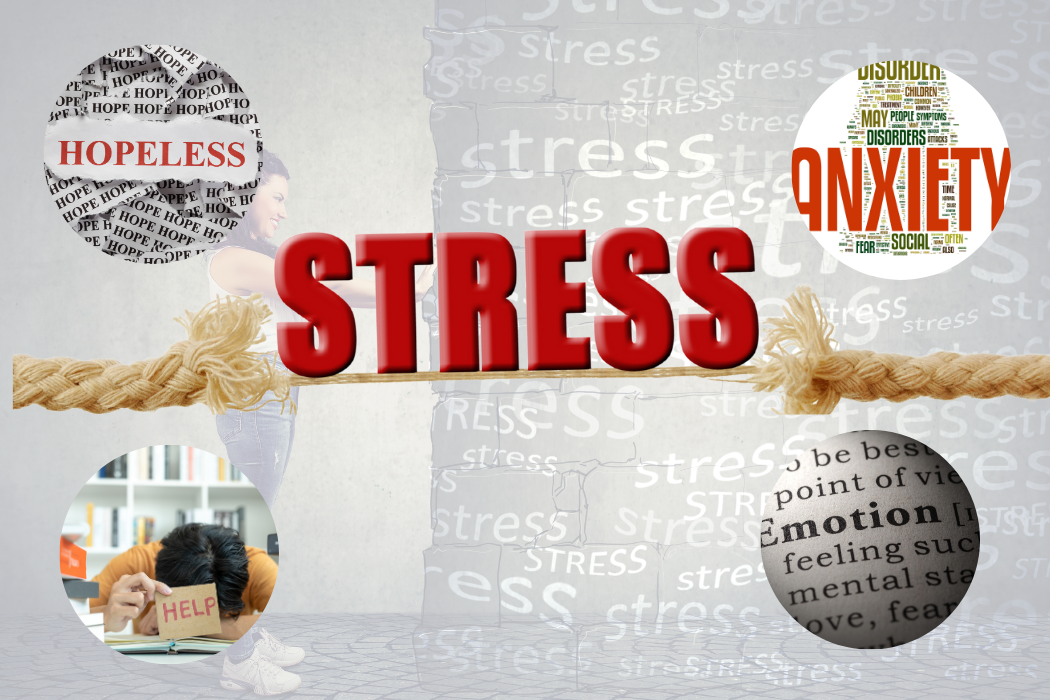
Stress Management: How Cortisol, Brain Fog, and Everyday Pressure Slowly Take Over Your Life
Stress management(in all age groups, be it teenagers, adults, senior citizens, and even kids) usually becomes important only when the body or mind forces us to notice it. Most people don’t wake up thinking, “I’m stressed.” They wake up tired even after sleeping, read the same message twice without absorbing it, and feel overwhelmed by small things.
This isn’t a weakness. These are common stress symptoms, and they often appear long before we consciously label them as stress or anxiety.
What Is Stress? (And Why It Feels So Heavy)
Stress is your body’s built-in alarm system. When the brain senses pressure, a deadline, an argument, uncertainty about money or health, it releases hormones like cortisol and adrenaline. In short bursts, this response is helpful. It prepares you to act.
According to research referenced by organizations such as the American Psychological Association (APA) and the National Institutes of Health (NIH), problems begin when stress becomes constant. When the stress response doesn’t switch off, cortisol stays elevated. Over time, this affects sleep, digestion, immunity, and mental clarity.
The Types of Stress That Affect Daily Life
Not all stress feels the same. Understanding the different types of stress makes managing it more practical.
1. Acute Stress
Immediate situations, such as deadlines, traffic, and unexpected problems, cause short-term stress. It usually fades once the situation passes.
2. Chronic Stress
Stress that lingers due to unresolved issues such as ongoing work pressure, financial strain, or relationship conflict. Chronic stress keeps the body in a semi-alert state and is strongly linked to burnout and anxiety.
3. Psychological Stress
Stress is created by the mind in the form of overthinking, worrying about the future, replaying conversations, or constant self-pressure. Psychological stress is a major contributor to mental fatigue and brain fog.
4. Oxidative Stress
At a physical level, long-term stress increases inflammation and the production of free radicals in the body, a phenomenon known as oxidative stress. Medical research associates this with fatigue, accelerated aging, and reduced cellular repair.
Brain Fog: A Stress Symptom People Rarely Talk About
One of the most common yet overlooked stress symptoms is brain fog.
People often describe it as:
- Forgetting simple words
- Difficulty concentrating
- Feeling mentally slow
- Struggling to make decisions
Research links brain fog to chronic stress, sleep disruption, inflammation, and cortisol imbalance. It often appears alongside stress and anxiety, especially when the nervous system doesn’t get enough recovery time.
This is why managing stress isn’t just about feeling calm; it's about maintaining a sense of well-being. It’s about restoring mental clarity.
Stress, Anxiety, and OCD: Where They Overlap (and Where They Don’t)
- Stress and anxiety are related, but they aren’t the same.
- Stress usually has a clear trigger.
- Anxiety can persist even without an immediate threat.
- Conditions like OCD (obsessive-compulsive disorder) are clinical and require professional diagnosis and care. However, psychologists note that unmanaged stress and anxiety can intensify repetitive thoughts and mental loops, making daily life feel more exhausting.
For this reason, stress management is often considered a foundation, not a replacement for therapy or medical treatment when needed.
Why Common Stress Relief Methods Don’t Last
- Most stress-relief advice focuses on quick fixes:
- Supplements or adaptogens
- Short meditation apps
- Distraction through screens or entertainment
Some of these can help temporarily. Certain adaptogens, for example, have been studied for their role in supporting the stress response. But on their own, they don’t change how a person’s nervous system reacts to stress. That’s why the relief often fades.
How to Manage Stress in Real Life (Not Just in Theory)
Effective stress management isn’t about forcing yourself to relax. It’s about helping the nervous system recover and respond more steadily over time.
When the stress response stays unchecked:
- Small problems feel overwhelming
- Emotions override logic
- Mental clarity drops
When the system is supported:
- Stressful situations still happen
- Reactions soften
- Focus and decision-making improve
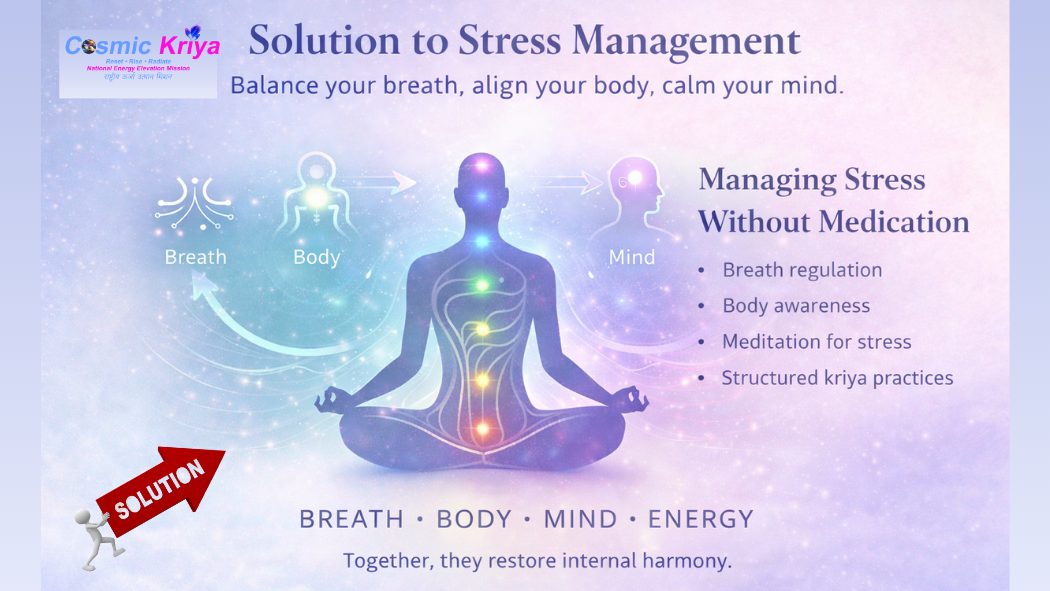
This is where structured practices that incorporate breath, attention, and body awareness can be beneficial.
Managing Stress Without Medication
Many people look for ways to manage stress without immediately turning to medication. Practices such as:
- Breath regulation
- Body awareness
- Meditation for stress
- Structured kriya practices
have been studied for their role in calming the nervous system and reducing stress symptoms. These approaches don’t replace medical care, but they can support stress management by improving awareness, emotional regulation, and recovery.
At Cosmic Kriya, stress management is approached through structured kriya practices that work with breath, attention, and awareness. The focus is not on suppressing stress, but on helping people notice stress earlier, reduce mental overload, and respond with more clarity instead of automatic reactivity.
These practices are designed to support mental clarity, emotional balance, and nervous-system recovery—especially for people experiencing brain fog, constant mental pressure, or long-term stress.
Simple Stress Management Steps You Can Start Today
- Breathing reset (3 minutes):
- Digital boundaries:
- Short daily practice:
- Sleep consistency:
Final Thought
Stress is not a personal failure. It’s a signal that the system is overloaded.
By understanding stress symptoms, recognizing brain fog, and learning how cortisol and different types of stress affect daily life, managing stress becomes less about “fixing yourself” and more about supporting how your mind and body function.
If you’re exploring non-medicinal, practice-based ways to manage stress and anxiety, structured kriya practices can be one of the tools, alongside lifestyle changes and professional support when needed.
Originally published on 12 February, 2026