
Signs of High-Functioning Anxiety in Corporate Professionals
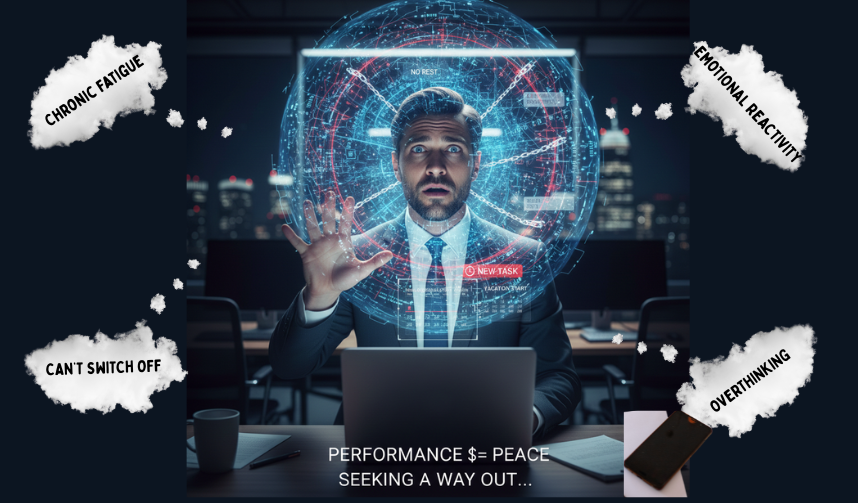
Signs of High-Functioning Anxiety in Corporate Professionals:
When You Look Successful but Feel Overwhelmed
You meet deadlines.
You handle responsibility without complaint.
You appear steady in meetings.
From the outside, you look composed and high-performing.
Internally, however, your mind rarely slows down.
If you consistently perform well at work yet feel mentally strained beneath the surface, you may be experiencing high-functioning anxiety, which is a common but often hidden pattern among corporate professionals.
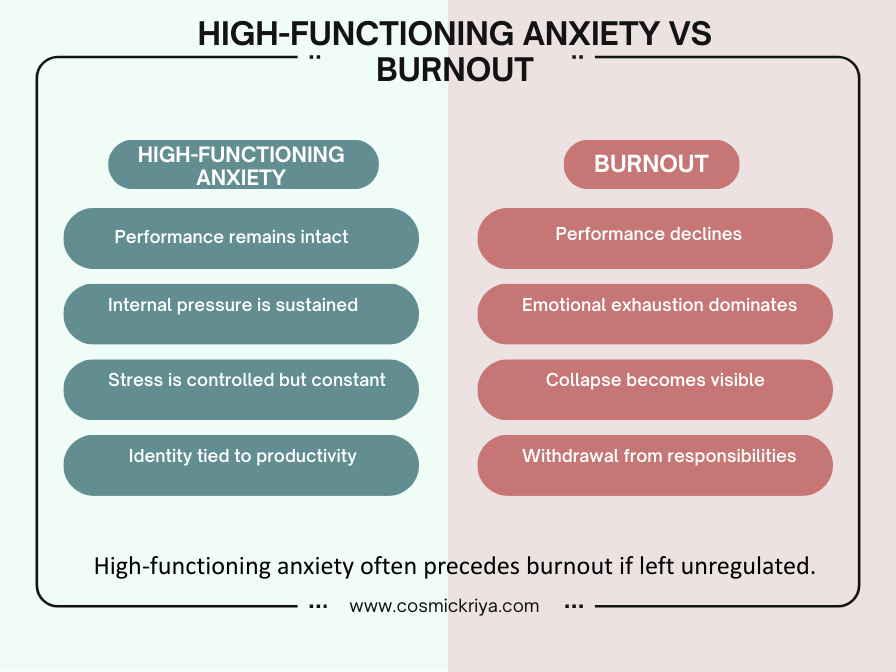
Unlike visible burnout, high-functioning anxiety does not reduce output. It sustains performance while gradually draining internal stability.
What Is High-Functioning Anxiety?
High-functioning anxiety is not a formal medical diagnosis. It is a term used to describe individuals who maintain professional competence while experiencing persistent internal stress.
In corporate environments, this pattern is common among:
- Senior managers
- Executives
- Entrepreneurs
- Team leads
- High achievers
You continue to function effectively.
But functioning is not the same as being regulated.
Performance and nervous system stability are separate systems.
High-Functioning Anxiety Symptoms in the Workplace
High-functioning anxiety at work often presents subtly. Common signs include:
1. Constant Overthinking
You replay conversations after meetings.
You mentally draft responses long before they are required.
You anticipate potential mistakes before they occur.
This is not preparation. It is cognitive hyperactivation.
2. Difficulty Switching Off After Work
Even during weekends or vacations, your mind continues scanning for tasks or risks.
You struggle to experience genuine mental rest.
This is a nervous system that has adapted to sustained alertness.
3. Perfectionism Driven by Internal Pressure
You set high standards — but rarely feel satisfied after achieving them.
Relief replaces satisfaction.
Motivation may be driven more by fear of underperforming than by genuine inspiration
4. Irritability Outside Professional Settings
You maintain composure at work but become impatient in personal spaces.
Chronic workplace anxiety reduces emotional bandwidth at home.
5. Persistent Mental Fatigue
You deliver results consistently , yet feel internally drained.
Sleep may not feel restorative.
Downtime may feel unproductive rather than calming.
This is a common hidden anxiety symptom in high-performing professionals.
High-Functioning Anxiety vs Burnout
Understanding the distinction is important.
Why Corporate Professionals Experience Hidden Anxiety
Modern corporate systems reward:
- Responsiveness
- Speed
- Availability
- Control
- Output consistency
Over time, these conditions cause the nervous system to remain mildly activated.
You may notice:
- Discomfort during stillness
- Relief only after problems are solved
- Subtle fear of underperformance
- Internal pressure despite objective success
These are not personality flaws.
They are stress-adapted patterns.
This stress pattern is not limited to corporate professionals. Similar emotional overload is seen in modern parents and even children exposed to digital overstimulation.
The Nervous System Behind High-Functioning Anxiety
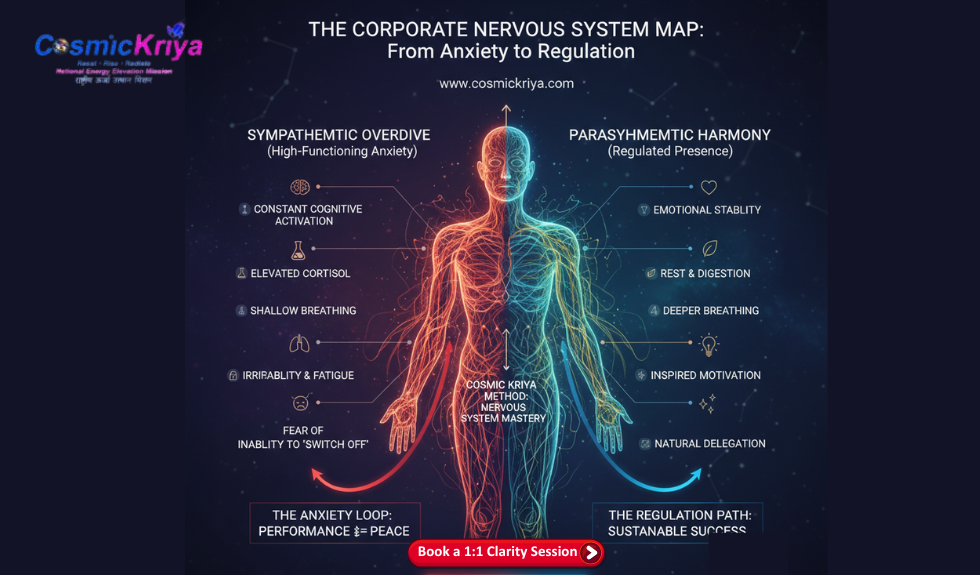
High-functioning anxiety reflects sustained sympathetic nervous system activation often described as low-grade fight-or-flight mode.
This state can lead to:
- Elevated baseline cortisol
- Shallow breathing patterns
- Reduced emotional regulation
- Faster decision fatigue
- Decreased cognitive flexibility
The body remains in a state of preparation, even when no immediate threat exists.
This pattern is sustainable short term.
Over time, it erodes clarity, emotional stability, and leadership presence.
Can High-Functioning Anxiety Turn Into Clinical Anxiety?
Yes.
When internal stress remains unaddressed, it may contribute to:
- Generalized anxiety symptoms
- Sleep disturbances
- Emotional reactivity
- Burnout-related collapse
Early awareness significantly improves long-term regulation outcomes.
High-Functioning Anxiety in Executives and Leaders
For leaders, hidden anxiety often manifests as:
- Difficulty delegating
- Over-monitoring performance
- Hyper-responsibility
- Reduced tolerance for unpredictability
- Mental strain behind professional composure
Leadership requires emotional regulation — not just strategic thinking.
Without regulation, decision quality subtly declines over time.
What Actually Reduces High-Functioning Anxiety
More productivity systems rarely solve the issue.
Effective reduction requires:
- Nervous system regulation
- Emotional stability training
- Stress pattern identification
- Structured internal awareness
- Measurable assessment
Without clarity, coping strategies remain temporary.
The First Practical Step: Structured Assessment
If you resonate with these signs of high-functioning anxiety, begin with evaluation — not assumption.
Before changing routines, identify:
- Your stress-reactivity baseline
- Your regulation capacity
- Your internal operating pattern
- Your cognitive fatigue markers
Assessment precedes correction.
If you are a corporate professional who appears stable externally but feels internally strained, structured clarity is the appropriate first step.
Book a 1:1 Clarity Session to understand your stress patterns, LC snapshot, and 30-day structured recalibration plan.
Because composure is not the same as regulation.
What You Can Do Next
✔ Take the 3-Minute Stress Level Check
✔ Join the Free Stress Management Webinar
✔ Book a 1-on-1 Clarity Call
Originally published February 25, 2026
Frequently Asked Questions
About High-Functioning Anxiety
Performance does not equal nervous system regulation.
You can meet expectations while your stress response remains activated, creating internal overload over time.
Yes.
Chronic internal stress reduces clarity, emotional tolerance, and strategic flexibility — all essential for leadership effectiveness.
When stress becomes baseline, the brain continues scanning for potential issues even in safe environments.
Structured regulation retrains this response.
No.
Burnout is a visible collapse.
High-functioning anxiety is sustained internal pressure that often leads to burnout if unmanaged.
Structured assessment and nervous system regulation.
Identifying patterns allows targeted intervention rather than random coping strategies.